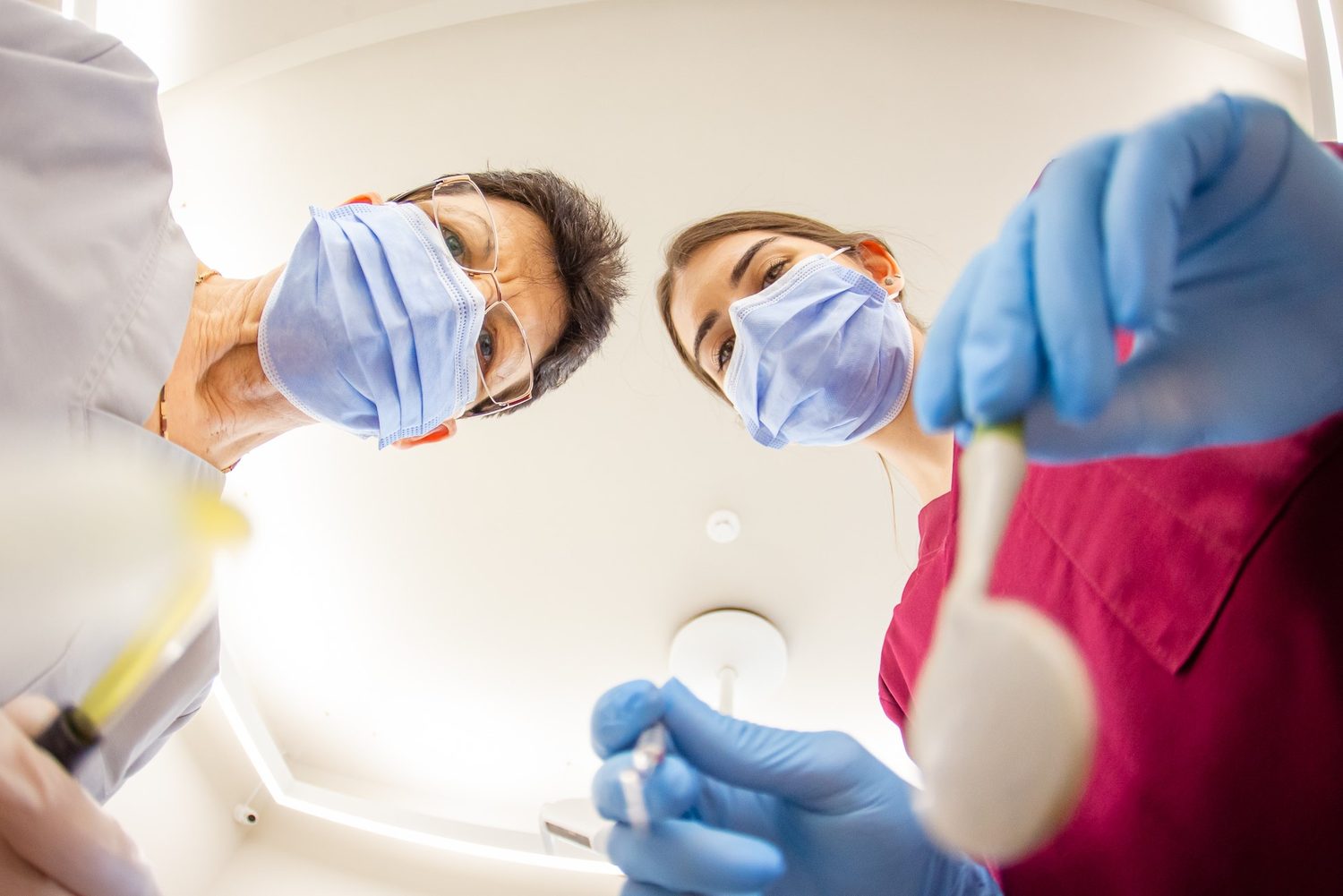
Paediatric dentistry
The child and adolescent patient consults the paediatric dentist because the primary teeth and the permanent teeth undergoing eruption require specific procedures and treatments.
The primary teeth begin their eruption at around the age of 4–6 months and complete it at around the age of 3 years, reaching a total of 20. During the same period the permanent teeth are already developing within the bone, which is why it is important both to establish fluoride prophylaxis and to maintain rigorous hygiene of the primary teeth, since their conditions can influence the development of the permanent dentition.
The habits of correct oral hygiene are acquired from this very age, under the attentive guidance and supervision of the parents.
The eruption of the permanent teeth begins at around the age of 6 years with the first molar and the lower front incisors, and is completed in adulthood, at around the age of 18–24 years, with the third molar.
To prevent the onset of dental caries, fluoride treatments and dental sealing can be carried out.
Fluoridation consists of applying fluoride-containing gels to the tooth in order to protect the dental enamel.
Dental sealing is the procedure of applying flowable composites into the grooves and pits (areas that are difficult to clean) in order to prevent the retention of dental plaque within them.
The paediatric dentist may recommend the fabrication and wearing of special mouthguards (dental guards) intended to protect the integrity of the teeth of children who take part in sports carrying a risk of injury to the dento-maxillary apparatus (contact sports).