Orthodontics
What is orthodontics?
Orthodontics is the specialty of dental medicine that aims to straighten the position of the teeth, to regulate the occlusion and the relationships between the two jaws, and to monitor and correct the growth and development of the dental structures. Dental anomalies are frequently encountered in children and adolescents. Incorrect tooth positions and occlusions affect, over time, the health of the teeth, the gums and the temporomandibular joint. In addition, deficient chewing can have consequences for the health of the digestive tract.
Symptoms / Anomalies
- Crowded teeth;
- Spaced teeth;
- Ectopic teeth – the positioning of a tooth outside the perimeter of the dental arch, while topographically maintaining its projection onto the arch;
- Open bite – the presence of a gap, that is a lack of contact between the upper and lower incisors when the posterior teeth are in occlusion;
- Crossbite – the upper teeth do not overlap the lower ones correctly;
- Reverse bite – the lower front teeth protrude well forward, the upper ones are set well back, or both situations occur at the same time;
The First Visit
Specialists recommend that the first orthodontic assessment be carried out before the age of 7. During childhood and adolescence, the jaw bones grow and mature and, therefore, it is much easier to treat any anomaly in their position.
In adults, the treatments applied require a longer period of time before results can be observed, because the jaw bones have stopped growing.
Orthodontic treatment begins with a consultation, followed by the drawing up of a treatment plan. Depending on the patient's dental status, the orthodontic appliance may be fixed or removable.
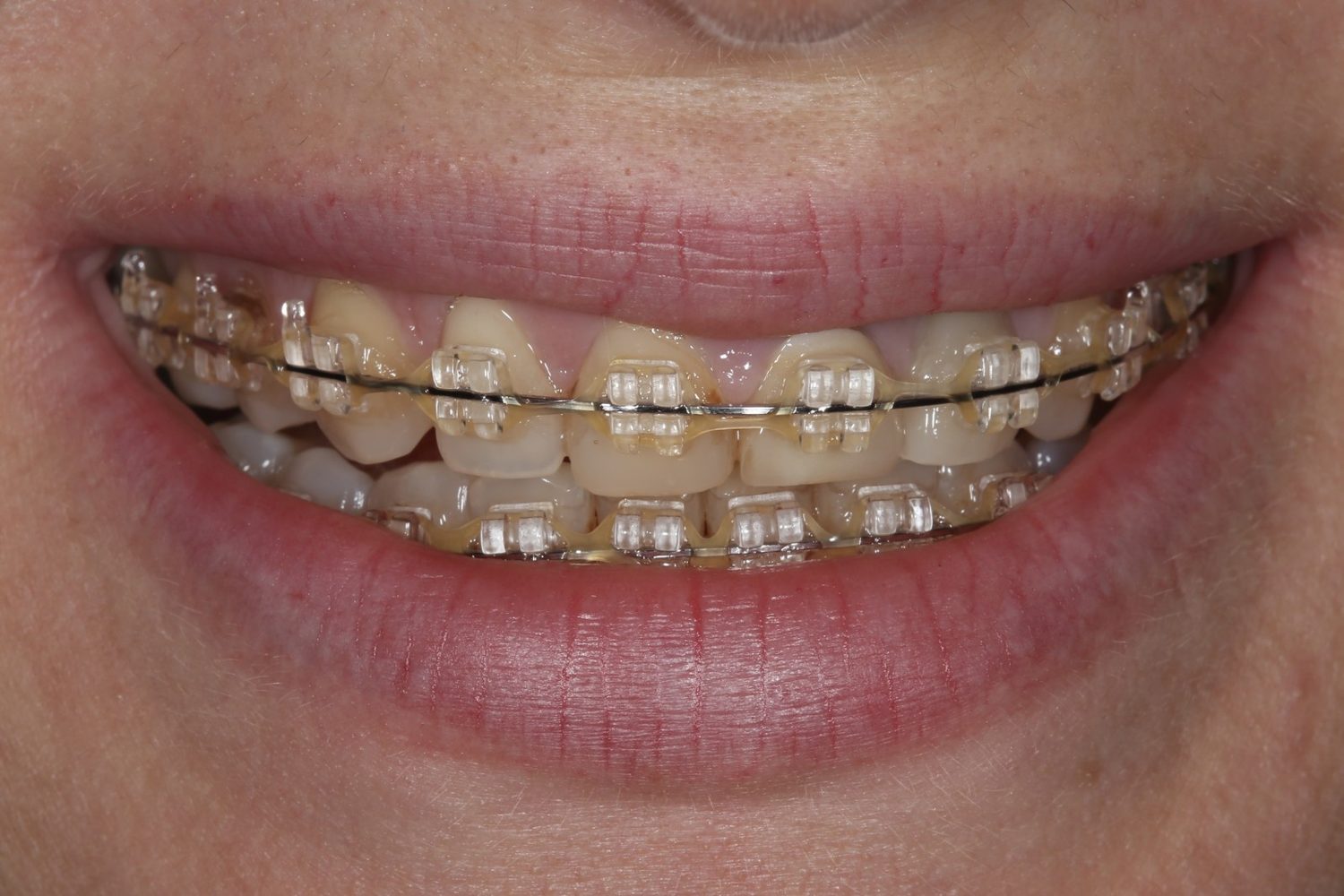
The fixed orthodontic appliance consists of metal or ceramic (tooth-coloured) brackets that are attached to the teeth and various types of metal wires that connect them. This type of appliance is recommended after the eruption of the permanent dentition. Most often, the duration of a treatment with such an appliance is between 12 and 24 months. Subsequently, the patient will wear, for a period, a special retention appliance (retainer), whose role is to maintain and stabilise the results obtained from the treatment. The retention appliance can be either in the form of a transparent tray, worn at night, or in the form of a thin metal wire, applied to the back of the teeth.