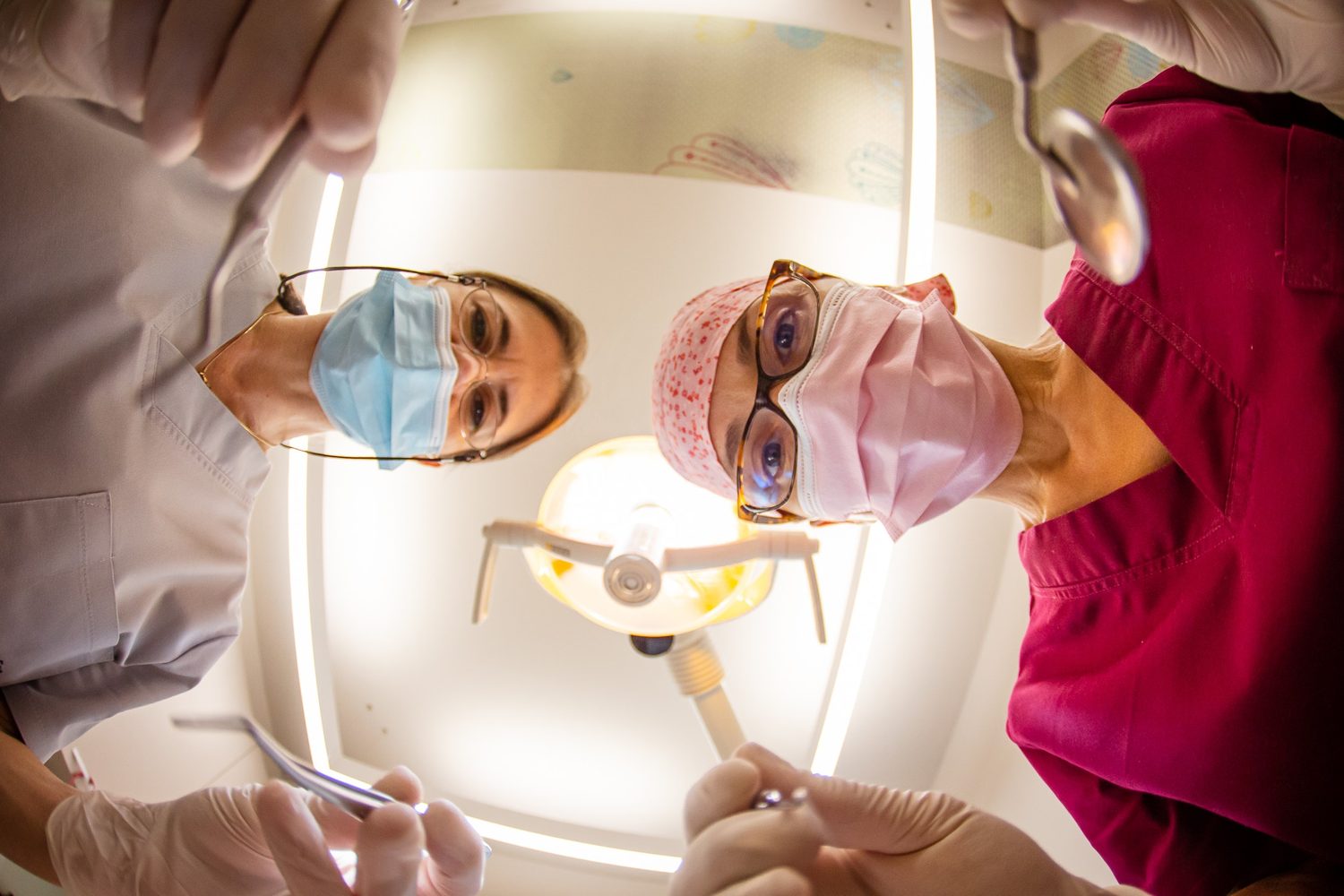
Cosmetic dentistry
Cosmetic dentistry is the dental discipline that combines the practitioner's knowledge and experience from all the other dental fields. Dentists who focus on aesthetics possess both information about the anatomy and function of the masticatory apparatus and extensive knowledge of form, colour and light. In practice, cosmetic dentistry is not a separate branch of dentistry, but a field that brings together techniques and procedures from several branches of dentistry, all of which aim to improve the appearance and function of the dento-maxillary apparatus.
Cosmetic dentistry addresses both the teeth and the adjacent tissues (gums, bone contour, lips). Thus, we can group the techniques used in aesthetics into several categories:
- techniques for restoring the shape and structure of the teeth: enameloplasty, tooth whitening, dental depigmentation, placement of tooth-coloured fillings, placement of veneers or dental crowns, fitting of dental appliances;
- techniques for restoring the shape and health of the soft tissues: gingivectomy, gingivoplasty, frenectomy, guided tissue regeneration;
- techniques for restoring the shape, volume and structure of the bone tissue: guided bone regeneration.
The most common procedures are:
Tooth whitening – a procedure by which the colour of the teeth is changed towards lighter shades. It is performed by applying, on the surface of the teeth or inside them, substances containing peroxides that oxidise the colouring agents fixed within the tooth structure. This application can be carried out on all the teeth or only on those that have an unwanted colour.
Tooth-coloured fillings and inlays – the treatment of caries and the filling of the cavities remaining after removal of the carious tissue with materials similar to the tooth substance (composite resins, ceramic materials).
Dental veneers – prosthetic pieces applied to the vestibular surface of the teeth in order to correct their defects of shape and colour for aesthetic purposes.
Dental veneers are of two kinds:
- direct – made by directly applying, in the practice, a layer of composite resin to the surface of the tooth,
- indirect – made in the dental laboratory and then cemented onto the surface of the teeth by the dentist in the practice.
Tooth-coloured dental crowns – crowns and bridges are made from tooth-coloured materials (ceramic materials or composite resins). They are aesthetic and functional prosthetic solutions, preferred because of their structural and chromatic resemblance to the natural dental tissues. In modern dentistry, their fabrication is based on computerised techniques of design and manufacture, achieving prosthetic fits of the order of microns.
Gingival plastic surgery – a set of surgical techniques that allow the reshaping and repositioning of the gum in order to obtain regular and symmetrical gingival contours or to cover defects resulting from gingival recessions.